 EN
EN
 AR
AR BG
BG HR
HR FR
FR DE
DE IT
IT JA
JA KO
KO PL
PL PT
PT RO
RO RU
RU ES
ES ID
ID LV
LV LT
LT SR
SR SK
SK SL
SL UK
UK VI
VI ET
ET HU
HU TH
TH TR
TR FA
FA GA
GA BE
BE HY
HY AZ
AZ KA
KA BN
BN LA
LA MN
MN NE
NE MY
MY KK
KK TG
TG UZ
UZ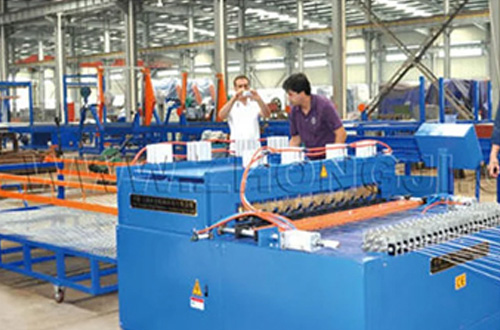
Introduction: Beyond the Sandwich Panel
A modern building envelope is more than just a series of insulated walls. It is a complex assembly of structural components, decorative trims, flashing, and secondary framing. For a manufacturer, being able to provide only the sandwich panel is often a missed opportunity. To become a true "solution provider" in the steel construction industry, integrating cold roll forming equipment with sandwich panel production lines is the logical next step. This combination allows a factory to transition from a single-product supplier to a comprehensive building envelope system manufacturer.
This transformation not only expands the product line but also enhances the brand's professional image in the eyes of customers. When clients realize you can provide one-stop services from main structural support to final waterproofing details, trust increases significantly, making it easier to secure high-value large-scale project contracts. Additionally, producing all components internally allows for better control over the overall project delivery schedule, avoiding delays caused by external suppliers that could impact the entire project progress.
Buyer Risk: The Danger of Incomplete Systems
Buying sandwich panel equipment without considering the peripheral steel components introduces several risks to the business model:
1. Supply Chain Dependencies
If your customers have to buy C/Z purlins or roof profiles from your competitors, you lose the opportunity to "bundle" the project, reducing your overall profit margin per square meter of building.
Furthermore, relying on external suppliers means you have reduced control over raw material price fluctuations and logistics disruptions. During periods of volatile steel prices, having internal production capabilities can serve as a hedging mechanism to stabilize cost structures and offer more competitive bundled prices in negotiations.
2. Compatibility Issues
When the sandwich panels come from one supplier and the flashing or structural profiles from another, there is a risk of fitment issues on-site. Any slight deviation in profile depth can lead to water leakage or structural misalignment.
Production tolerance standards may differ between manufacturers, even if both are within industry standards. Cumulative errors can lead to difficulties in on-site installation. For example, slight deviations in purlin spacing may prevent sandwich panels from snapping into place smoothly, forcing workers to perform on-site cutting or adjustments. This not only increases labor costs but may also damage the anti-corrosion coating of the panels.
3. Market Limitation
In many emerging markets, contractors prefer a "one-stop-shop." If you cannot provide the roof profiles or the structural framing (purlins), you may be excluded from the bidding process for large-scale industrial warehouses.
Many government or large private projects explicitly require bidders to have the capability to provide a complete envelope system to ensure a single point of responsibility. Lacking cold roll forming capabilities puts you at a disadvantage during pre-qualification, losing the ticket to compete in the high-end market.
Key Evaluation Points for a Combined System
1. Integration of Structural and Insulated Components
A complete system consists of the "core" (the sandwich panel) and the "frame" (roll-formed profiles).
-
Sandwich Panels: Provide the thermal and acoustic barrier.
-
C/Z Purlins: Provide the structural support for the panels.
-
Single-Skin Profiles: Often used for internal partitions or as a cheaper alternative for uninsulated storage areas.
In addition to main components, consider the production capability for accessories such as eaves trims, ridge caps, and door/window sub-frames. These small but essential parts are often common sources of on-site leaks; internal production ensures their shapes perfectly match the main panels.
2. Technical Synchronization
When combining these lines, the factory must manage:
-
Color Matching: Ensuring the pre-painted steel (PPGI) used in the roll former matches the sandwich panel skin perfectly.
-
Precision: Roll-formed profiles must have tight tolerances (Zhongji profiles maintain within ±1 mm) to ensure they sit flush against the sandwich panels.
-
Throughput: The roll former (typically 10–30 m/min) must be able to keep pace with the sandwich panel production schedule.
Color batch management is a key challenge. It is recommended to establish a unified coil inventory management system to ensure that panel skins and cold-formed profiles for the same project come from the same batch of steel coils, eliminating visible color differences. Meanwhile, production scheduling software should coordinate order priorities for both lines to avoid semi-finished product backlog.
3. Operational Versatility
A combined factory can pivot based on market trends. If a project budget is slashed and the client moves from PIR panels to a simple double-skin roof with glass wool, the roll forming equipment ensures you still get the contract for the metal sheets and purlins.
This flexibility is also reflected in responding to seasonal demand fluctuations. During the off-season for construction, more capacity can be allocated to cold-formed profiles with high standardization and inventory demand; during peak seasons, resources are concentrated on producing high-value-added sandwich panels. This dynamic resource allocation capability significantly improves asset utilization.
Zhongji-Specific Support: Integrated Engineering
Zhongji Machinery is unique among Chinese manufacturers for its dual expertise in both sandwich panel lines and high-precision cold roll forming equipment.
-
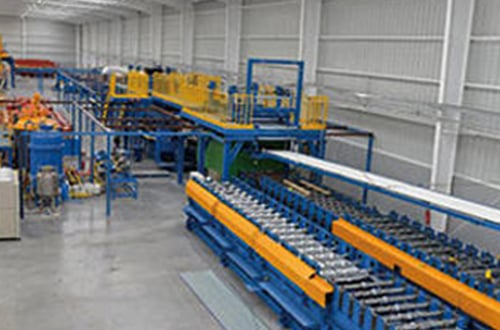
The "Turnkey" Advantage: Zhongji provides complete factory layouts where the roll forming area and the sandwich panel line are optimized for material flow.
-
Custom Tooling: Zhongji can design specialized rollers for unique architectural profiles, ensuring that your building envelope system stands out aesthetically.
-
34 Years of Mastery: Leveraging their status as a technology-oriented manufacturer with patented technologies, Zhongji ensures that the automation systems across both lines can be integrated for easier management.
-
Global Track Record: With exports to more than 100 countries and regions, Zhongji has helped dozens of factories in Russia and the Middle East setup "envelope hubs" that produce everything from 200 mm PIR cold-room panels to lightweight C-purlins.
Zhongji's integrated solution also includes unified electrical control and data interfaces, allowing operators to monitor the operating status of both lines from a central console. This digital integration not only simplifies operations but also provides data support for preventive maintenance, further reducing downtime risks.
Practical Checklist for a Combined Production Strategy
-
Component Mapping: List all the steel components required for a typical industrial building in your market. Include not only main structural members but also detailed quantities of various connectors, sealants, and fasteners to assess whether additional auxiliary equipment or outsourcing partnerships are needed.
-
Material Synergy: Check if you can use the same steel coil suppliers for both the sandwich panels and the roll-formed profiles. Unifying suppliers helps obtain bulk purchase discounts and simplifies quality inspection processes. Ensure the supplier can provide substrate thicknesses and coating types suitable for both processes.
-
Layout Planning: Ensure your factory has a dedicated zone for profile stacking and trim folding, which take up different space than panel stacking. Cold-formed profiles are typically long and prone to deformation, requiring special hanging or layered stacking racks. Reserve sufficient forklift aisles and turning space during planning to improve logistics efficiency and reduce handling damage.
-
Tooling Versatility: Ask the supplier if the roll former can be configured with quick-change "cassettes" to produce multiple profiles on one machine. Quick changeover technology can reduce changeover time from hours to minutes, greatly enhancing the economics of small-batch, multi-variety production. Confirm the durability of the molds and the simplicity of the replacement operation.
-
Training: Ensure your operators are trained on both the high-pressure foaming systems of the panel line and the precision roller adjustments of the roll former. Cross-training is crucial. Cultivating composite talents who understand both foaming processes and cold roll forming allows for flexible deployment during staff shortages, improving the team's overall emergency response capability.
Conclusion
The transition from a panel manufacturer to a building envelope system provider is the most effective way to increase project value and market resilience. By integrating cold roll forming equipment with sandwich panel production lines, factories can offer a holistic solution that guarantees compatibility, quality, and aesthetic consistency. Zhongji Machinery's decades of experience in both fields make them the ideal partner for buyers looking to build a high-performance, integrated production system.
In today's highly competitive construction market, the ability to provide a complete, seamlessly connected envelope system is not only a reflection of technical strength but also a symbol of business wisdom. Choosing a partner like Zhongji means you are not just buying equipment, but investing in an ecosystem capable of adapting to future market changes and continuously creating value.