 EN
EN
 AR
AR BG
BG HR
HR FR
FR DE
DE IT
IT JA
JA KO
KO PL
PL PT
PT RO
RO RU
RU ES
ES ID
ID LV
LV LT
LT SR
SR SK
SK SL
SL UK
UK VI
VI ET
ET HU
HU TH
TH TR
TR FA
FA GA
GA BE
BE HY
HY AZ
AZ KA
KA BN
BN LA
LA MN
MN NE
NE MY
MY KK
KK TG
TG UZ
UZ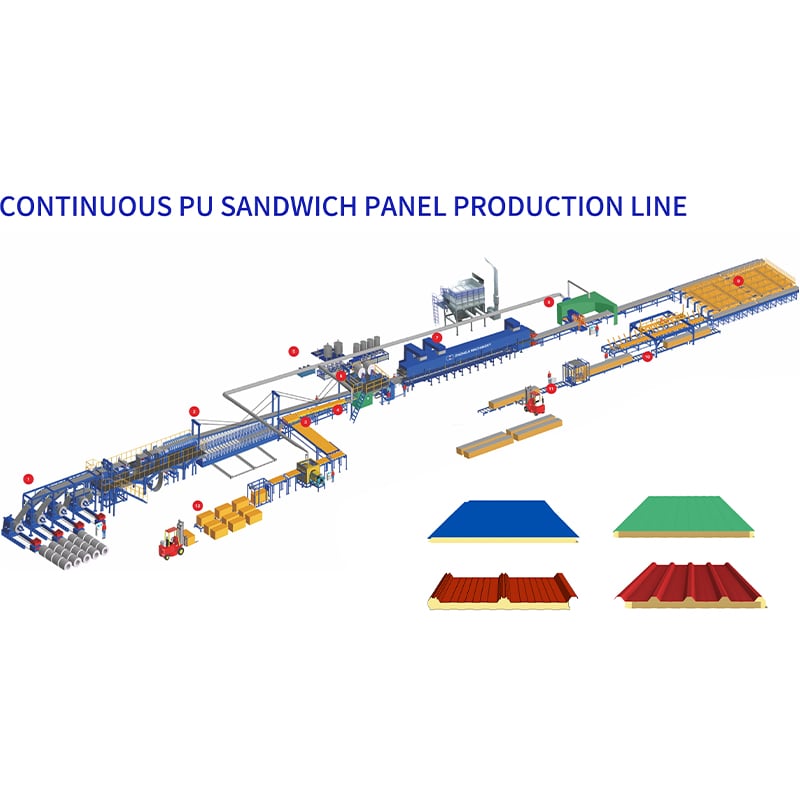
Introduction: The Multi-Material Mandate
In today's construction market, the core material of a sandwich panel is no longer a fixed choice. A pharmaceutical warehouse might require Polyurethane (PU) for its superior insulation, while an adjacent industrial workshop demands Rock Wool for its A-grade fire resistance. For the manufacturer, having separate lines for each material is often prohibitively expensive and takes up too much factory space. The solution lies in multi-core-material compatible production lines—a hallmark of advanced sandwich panel engineering.
This versatility is not just a response to market demand but also a reflection of corporate risk resilience. As global standards for building energy efficiency and fire safety become increasingly stringent, factories capable of flexibly switching between different core materials will maintain stronger survival capabilities and competitiveness amidst policy changes and market fluctuations.
Buyer Risk: The Vulnerability of Single-Material Lines
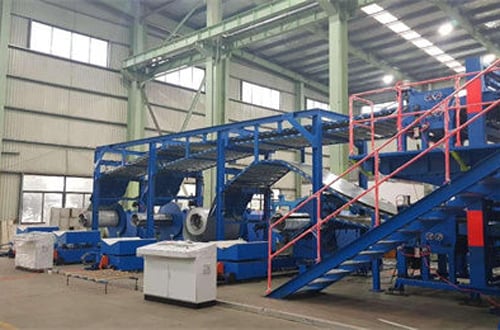
Investors who commit to a single-material production line face three critical risks:
1. Market Shift Risk
If local regulations change to mandate higher fire safety (A-grade), an EPS-only or PU-only factory may find its entire inventory and equipment obsolete overnight.
Furthermore, a single-material production line limits the diversity of the customer base. When demand in a specific industry (such as cold chain logistics) slows down, the inability to quickly pivot to other hot sectors (such as fire-resistant walls for public buildings) leads to a single and unstable revenue stream.
2. Low Asset Utilization
If demand for rock wool panels peaks in the summer but drops in the winter, a dedicated rock wool line will sit idle for months, draining the company's capital.
Idle equipment not only means zero output but also entails continuous maintenance costs, depreciation losses, and interest on tied-up capital. In contrast, a combined production line can achieve balanced production throughout the year by adjusting the product mix in different seasons, maximizing asset return on investment.
3. Operational Complexity
Managing two different suppliers for two different machines creates a maintenance nightmare, with different spare parts, different software, and different operator skill sets required.
Dealing with multiple points of contact also increases communication costs and coordination difficulties. When failures occur, different suppliers may shift blame to each other, leading to extended downtime. A unified source of technical support can significantly simplify the troubleshooting process and improve overall operational efficiency.
Key Evaluation Points for Combined Lines
1. Switching Mechanics and Downtime
The "gold standard" for a combined line is how quickly it can switch from PU injection to Rock Wool slab insertion.
-
PU Mode: Requires a high-pressure foaming system and precise temperature control on the double-belt.
-
Rock Wool Mode: Requires an automated mineral wool slab feeding system, longitudinal cutting, and dust extraction modules. A well-designed line from Zhongji allows for these transitions without dismantling the core of the machine.
Efficient switching relies not only on modular hardware design but also on the intelligence of software control. Advanced PLC systems should store process parameter recipes for different materials, enabling one-button preset adjustments that reduce changeover time from hours to minutes, significantly reducing non-productive losses.
2. Pressure and Temperature Control
PU requires consistent heat to maintain the foaming reaction temperature (typically 40–60°C), while Rock Wool is a mechanical composite process that relies on glue application and high-pressure pressing. The double-belt conveyor must be able to handle both the chemical expansion pressure of PU and the physical compression required for dense mineral wool.
The rigidity and synchronization of the double-belt system are crucial. When pressing rock wool, high parallelism is needed to prevent uneven panel thickness; during the initial stage of PU foaming, gentle pressure guidance is required to avoid foam overflow or voids. A hydraulic system with adaptive pressure regulation capabilities is key to resolving this contradiction.
3. Glue and Injection Systems
A combined line must integrate both the high-pressure PU/PIR injection head and the glue-spraying system used to bond rock wool to the steel skins. These systems must be synchronized through a single PLC to prevent "glue-clogging" or "short-shots" during material changeover.
The design of cleaning procedures is equally important. When switching from PU to rock wool or vice versa, there must be an automated pipeline cleaning function to prevent residual black and white materials from mixing and curing to clog nozzles, or residual glue from contaminating the foaming head. An efficient self-cleaning mechanism is the foundation for ensuring long-term stable operation.
Zhongji-Specific Support: The Multi-Core Pioneer
Zhongji Machinery has been at the forefront of "Multi-Core Compatible Forming Technology."
-
Wide Material Range: Their systems support EPS, Rock Wool, Glass Wool, PU/PIR, and even Phenolic core materials on a single integrated line.
-
Precision Foaming: For the PU component, Zhongji's high-pressure system maintains a black/white ratio error of within ±1%, ensuring no hollow spots when switching between materials.
-
Fire Safety Expertise: Having participated in drafting the national standard for 3D steel wire mesh sandwich panels, Zhongji understands the nuances of fire-rated material handling better than most.
-
Efficiency and Qualified Rate: Despite the complexity of multi-material switching, Zhongji maintains a finished product qualified rate of ≥99% and offers 8%–15% energy savings compared to standard competitors.
Zhongji's R&D team continuously optimizes mixing head designs and fluid dynamics models to ensure extremely high metering accuracy and mixing uniformity, even under frequent material switching conditions. This technical foundation makes Zhongji's equipment particularly outstanding when handling high-viscosity adhesives or fast-reacting foaming agents.
Practical Checklist for Multi-Core Strategy
-
Regulatory Audit: Check if local fire codes allow B1 (PIR) or require A-grade (Rock Wool) for various building types. Do not only focus on current regulations but also study policy trends for the next 3–5 years, especially plans for upgrading fire resistance levels for high-rise buildings, densely populated places, and special industrial facilities.
-
Glue Selection: Confirm the availability of high-quality adhesives that work with both the roll former and the rock wool core. Test the curing speed and bonding strength of the adhesive under different temperature and humidity conditions to ensure it adapts to local climate conditions, and verify that its environmental performance meets the standards of export target markets.
-
Dust Management: Ensure your factory layout includes the powerful dust-control systems required specifically for rock wool cutting. Rock wool fibers are harmful to human health and must comply with occupational health and safety standards. Evaluate the air volume, filtration efficiency, and noise level of the dust collection system to ensure a safe and compliant working environment.
-
Software Verification: Ask if the machine's PLC has "recipe" memory for different materials, allowing for one-button parameter switching. Simulate a complete changeover process in actual operation, recording the specific time from stopping the previous batch to producing the first qualified new product, to verify the ease of use and stability of the software.
-
Operator Cross-Training: Ensure your team understands the chemical risks of PU handling and the mechanical risks of rock wool slab feeding. Develop detailed safety operating procedures and emergency plans, and conduct regular drills. Special emphasis should be placed on protection against PU isocyanates and dust prevention measures for rock wool fibers to safeguard employee health.
Conclusion
A combined PU and Rock Wool production line is more than just a piece of equipment; it is a market insurance policy. It allows manufacturers to follow the demand, whether that demand is for high-efficiency thermal insulation or high-security fire protection. Zhongji Machinery's expertise in multi-core technology provides the stability and precision needed to execute this strategy successfully, backed by 34 years of manufacturing excellence.
In an uncertain global market, flexibility is vitality. Choosing Zhongji's combined production line solution is not just about purchasing a set of advanced production equipment, but about building a solid platform for the enterprise that can calmly cope with various market challenges and continuously create value.