 EN
EN
 AR
AR BG
BG HR
HR FR
FR DE
DE IT
IT JA
JA KO
KO PL
PL PT
PT RO
RO RU
RU ES
ES ID
ID LV
LV LT
LT SR
SR SK
SK SL
SL UK
UK VI
VI ET
ET HU
HU TH
TH TR
TR FA
FA GA
GA BE
BE HY
HY AZ
AZ KA
KA BN
BN LA
LA MN
MN NE
NE MY
MY KK
KK TG
TG UZ
UZ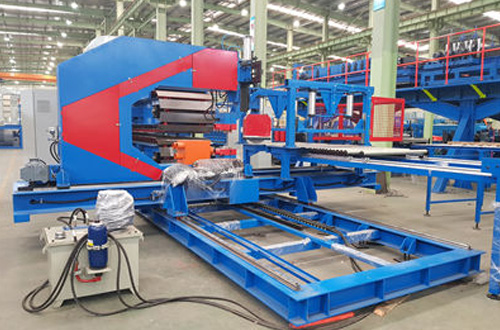
Introduction: Scalability and Strategy
In the world of sandwich panel manufacturing, the choice between a continuous and a discontinuous production line is the single most important decision regarding factory layout and capital expenditure. This choice is not a question of which is "better," but rather which matches the buyer's specific production philosophy and volume targets. Whether you are aiming for high-volume commodity production or low-volume, high-margin customization, the underlying equipment logic must follow your business goals.
This decision not only affects the initial return on investment period but also determines the company's future operational model and market competition strategy. A wrong choice may lead to long-term cost disadvantages or missed market opportunities, so it must be made based on detailed data analysis and long-term planning.
Buyer Risk: Miscalculating the Capacity Threshold
Choosing the wrong production architecture leads to immediate financial strain:
1. The "Over-Automation" Trap
Investing in a high-speed continuous line for a market that only orders 500 square meters at a time leads to massive waste during startup and shutdown sequences (PU "waste-heads" can be several meters long).
Furthermore, continuous production lines have extremely high requirements for order continuity. If orders are highly fragmented, frequent start-ups and shut-downs not only increase material loss but also accelerate the aging of key equipment components (such as hydraulic systems and heating elements), leading to maintenance costs far exceeding expectations.
2. The "Capacity Ceiling" Risk
A discontinuous line is excellent for flexibility, but it has a hard limit on daily output. If you secure a contract for a 100,000 sqm warehouse, a discontinuous line will fail to meet the delivery deadline, resulting in penalty clauses.
Beyond direct financial penalties, delayed delivery can severely damage corporate reputation, affecting eligibility for future large-scale project bids. In a competitive market, fulfillment capability is often more decisive than price.
3. Labor Inefficiency
Continuous lines require fewer but more highly-skilled operators (1–2 operators), whereas discontinuous setups often require more manual handling (3–4 operators), which can be a risk in regions with high labor costs.
With rising global labor costs and a shortage of skilled workers, discontinuous production lines relying heavily on manual labor face increasing pressure in recruitment and management. In contrast, although highly automated continuous lines have higher initial investments, they can significantly reduce reliance on labor and improve production stability in the long run.
Key Evaluation Points: Continuous vs. Discontinuous
1. The Continuous Logic (5–60 m/min)
-
When to Choose: If your daily order volume is consistently high and your panel specifications (width/lock) are standardized.
-
Key Advantage: Unmatched throughput and lower per-meter labor cost.
-
Requirement: Requires a stable supply of raw materials (steel coils and chemicals) and a sophisticated logistics system to handle the high output volume.
Continuous production lines also require strong backend processing capabilities, including automatic stacking, packaging, and warehousing systems. If backend bottlenecks are not resolved, the advantages of high-speed front-end production will not be realized, and may even cause damage due to finished product accumulation.
2. The Discontinuous Logic (Flexible Batch)
-
When to Choose: For small-batch orders, special panel types (like extra-thick cold storage doors), or when the budget is limited.
-
Key Advantage: Lower initial investment and nearly zero material waste during specification changes.
-
Requirement: Requires more factory floor space for manual curing and handling zones.
Discontinuous production is more suitable for scenarios requiring frequent mold changes or process parameter adjustments. Since each production run is an independent batch, quality control is more intuitive, allowing for refined adjustments according to specific customer requirements.
3. Automation and ROI
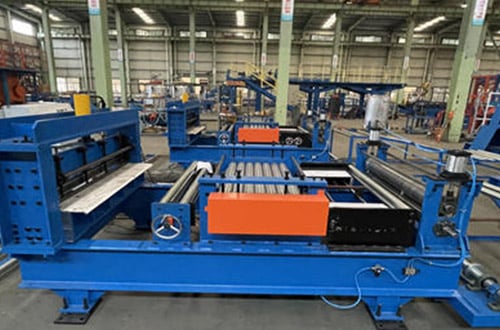
Zhongji's continuous lines integrate everything from uncoiling to stacking in one flow, ensuring that every second of machine time is converted into finished product. Discontinuous lines are often modular, allowing a buyer to start small and add automation components later.
This modular design provides a good growth path for startups with limited funds. As the business grows, automatic feeding, cutting, and stacking equipment can be gradually introduced to achieve smooth technical upgrades, avoiding cash flow pressure caused by one-time huge investments.
Zhongji-Specific Support: Tailored Factory Design
Zhongji Machinery does not force a "standard" line on any customer. Instead, they provide customized designs based on the buyer's "Production Target Map."
-
Design Consultation: Zhongji evaluates your target daily capacity, local labor costs, and budget to recommend the architecture that achieves the fastest payback period.
-
Turnkey Capability: For continuous lines, Zhongji provides a "Turnkey" solution that includes plant planning, ensuring the line speed (up to 60 m/min) is matched by the handling speed of the stacking equipment.
-
Accuracy Guarantee: Regardless of the line type, Zhongji guarantees high precision (width error within ±2 mm, thickness within ±1 mm).
-
Global Local Support: With 10 overseas offices, Zhongji can send engineers to help with "Capacity Ramping," a critical 3–7 day period after installation where the line is tuned to hit its target speed.
Zhongji's capacity ramping service includes not only equipment debugging but also operator training and process optimization guidance. By simulating various working conditions in a real production environment, it ensures that the team fully masters equipment operation and maintenance skills before formal production, maximizing equipment efficiency.
Practical Checklist for Capacity Selection
-
Project Backlog: Analyze your expected orders for the next 24 months. If the average project size is > 5,000 sqm, consider a continuous line. Also assess order stability. Even if the average scale is large, if orders fluctuate violently and unpredictably, discontinuous or semi-continuous lines may be a safer choice to balance efficiency and risk.
-
Budget Range: Is your investment capital sufficient for the higher upfront cost of a 60 m double-belt conveyor? In addition to the equipment itself, calculate the funding requirements for factory renovation, infrastructure support (such as power capacity expansion and foundation reinforcement), and initial raw material reserves to ensure overall budget adequacy.
-
Operator Skill: Do you have access to technicians who can manage a complex PLC-controlled continuous system? Assess the technical level of the existing team and develop corresponding recruitment or training plans. Continuous production lines have higher requirements for operators' fault diagnosis and preventive maintenance capabilities, requiring talent reserves in advance.
-
Raw Material Flow: Can your local suppliers deliver 10 tons of steel coils per day? Establish a diversified supply chain system to avoid over-reliance on a single supplier. Meanwhile, evaluate the reliability and cost of logistics transportation to ensure raw materials can reach the factory timely and at low cost.
-
Future Proofing: Does the chosen solution allow for future automation upgrades (e.g., adding an automatic stacking and packing machine)? Reserve interfaces and space during equipment selection to easily integrate advanced automation equipment such as robotic arms and AGV carts in the future, adapting to the development trend of intelligent manufacturing.
Conclusion
The decision between continuous and discontinuous production is a balance of volume, variety, and value. While continuous lines offer the ultimate in industrial efficiency, discontinuous lines provide the flexibility needed for high-specification niche markets. By partnering with Zhongji Machinery, buyers gain access to a technical team that can design either solution to meet world-class standards, ensuring that the factory's capacity always matches the market's opportunity.
Ultimately, there is no absolutely best production line, only the one that best suits your current stage and future vision. Zhongji Machinery, with its deep technical accumulation and rich global project experience, can provide you with the most objective and professional advice, helping you stand out in fierce market competition and achieve sustainable business success.