
 EN
 AR
 BG
 HR
 FR
 DE
 IT
 JA
 KO
 PL
 PT
 RO
 RU
 ES
 ID
 LV
 LT
 SR
 SK
 SL
 UK
 VI
 ET
 HU
 TH
 TR
 FA
 GA
 BE
 HY
 AZ
 KA
 BN
 LA
 MN
 NE
 MY
 KK
 TG
 UZ
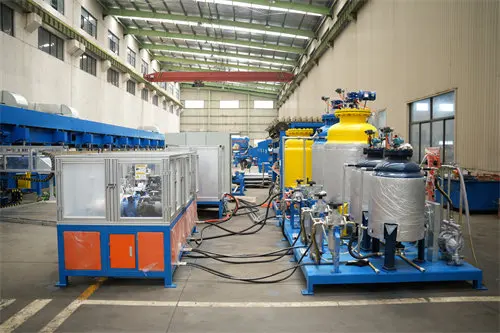
Understanding the various production factors that affect foam forming machine efficiency is crucial for manufacturers seeking to optimize their operations. Foam forming machines are integral in producing composite panels and foam plastics, and their efficiency directly impacts production costs and product quality. We will explore the primary factors influencing the efficiency of foam forming machines, empowering purchasing managers, engineers, and product managers to make informed decisions when selecting and operating these machines.
What Production Factors Influence Foam Forming Machine Efficiency?
Several key production factors influence the efficiency of foam forming machines. These include machine design, operational parameters, and material quality.
Machine Design: The design and engineering of the foam forming machine play a critical role. High-precision equipment, like those produced by Shanghai Zhongji Machinery Co., Ltd., ensures that machines operate smoothly and consistently. Machines that incorporate European technology often feature advanced control systems for monitoring and adjusting parameters in real-time, ensuring optimal performance.
Operational Parameters: Factors such as temperature, pressure, and mixing ratios significantly affect foam formation. Maintaining precise control over these parameters can prevent issues such as incomplete foam formation or excessive wastage of materials. For instance, improper temperature settings can lead to suboptimal foam density, affecting the final product's quality.
Material Quality: The quality of raw materials used in foam production directly impacts machine efficiency. High-quality polyurethane or EPS materials can enhance the foam's characteristics, resulting in better performance during the forming process. Poor material quality can lead to clogging or inefficiencies within the machine, necessitating maintenance and downtime.
How to Choose the Right Foam Forming Machine for Your Needs
Selecting the appropriate foam forming machine involves understanding your specific production requirements. Here are several considerations to guide your decision:
Production Volume: Assess the volume of foam products you need to produce. High-capacity machines are suitable for large-scale production, while smaller units may suffice for niche applications.
Customization Needs: Determine if your production requires specific features or capabilities, such as varying foam densities or sizes. Some manufacturers, like Shanghai Zhongji, offer customizable solutions to meet diverse production demands.
Technology Integration: Look for machines equipped with modern technology that allows for automation and monitoring. This can significantly enhance operational efficiency and reduce human error.
Budget and ROI: Analyze the cost of the machine in relation to its expected return on investment. While lower-priced machines might be appealing, they may not deliver the performance or longevity required for sustained production.
Key Specifications for Evaluating Foam Forming Machines
When evaluating foam production line, it's important to consider specific technical specifications that impact performance:
Mixing Speed and Efficiency: The mixing speed should match the material's viscosity. Higher speeds may yield better mixing but can also introduce air bubbles, affecting foam quality.
Temperature Control Range: Machines should have a wide and precise temperature control range to accommodate different material types and formulations.
Pressure Capabilities: Assess the machine's ability to maintain consistent pressure throughout the forming process. Inadequate pressure can lead to incomplete foam structure.
Energy Consumption: Consider the machine's energy efficiency ratings. Machines designed for energy savings can significantly reduce operational costs over time.
Ease of Maintenance: Evaluate how easy it is to perform routine maintenance. Machines with accessible parts and user-friendly design will minimize downtime and enhance productivity.
How Material Quality Affects Foam Forming Machine Performance
The performance of foam forming machines is highly dependent on the quality of materials used. Key aspects include:
Material Consistency: Consistent material viscosity ensures uniform foam production. Variability can lead to production inconsistencies and potential machine damage.
Additives and Blending: The inclusion of additives must be carefully managed. Some additives can improve foam properties but may also complicate the mixing process, affecting overall machine performance.
Compatibility: Ensure that the raw materials are compatible with the foam forming machine. Incompatible materials can cause clogging or damage to components, leading to costly repairs.
To maintain optimal performance, manufacturers should implement quality control procedures to test raw materials before they are introduced into the production line.
Applications of Foam Forming Machines in the Manufacturing Industry
Foam forming machines are versatile tools used in various applications across the manufacturing industry. Their primary uses include:
Composite Panel Production: Machines are essential in producing sandwich panels, which are widely used in construction and insulation applications. The efficiency of foam forming machines directly affects the quality and insulation properties of these panels.
Automotive Components: Foaming machine is critical in manufacturing lightweight automotive parts that enhance fuel efficiency. The ability to produce high-density foam components can significantly contribute to vehicle performance.
Packaging Solutions: The packaging industry benefits from foam forming machines that create protective packaging materials. The right machine can produce customized foam shapes that safeguard products during transit.
Consumer Products: From mattresses to furniture, foam forming machines are instrumental in producing consumer goods. The efficiency of these machines ensures that manufacturers can meet consumer demand without sacrificing quality.
Understanding the production factors that affect foam forming machine efficiency is essential for making informed purchasing decisions. By considering machine specifications, material quality, and application suitability, B2B buyers can choose the right foam forming solutions that enhance productivity and product quality.
Table of Contents
- What Production Factors Influence Foam Forming Machine Efficiency?
- How to Choose the Right Foam Forming Machine for Your Needs
- Key Specifications for Evaluating Foam Forming Machines
- How Material Quality Affects Foam Forming Machine Performance
- Applications of Foam Forming Machines in the Manufacturing Industry