 EN
EN
 AR
AR BG
BG HR
HR FR
FR DE
DE IT
IT JA
JA KO
KO PL
PL PT
PT RO
RO RU
RU ES
ES ID
ID LV
LV LT
LT SR
SR SK
SK SL
SL UK
UK VI
VI ET
ET HU
HU TH
TH TR
TR FA
FA GA
GA BE
BE HY
HY AZ
AZ KA
KA BN
BN LA
LA MN
MN NE
NE MY
MY KK
KK TG
TG UZ
UZ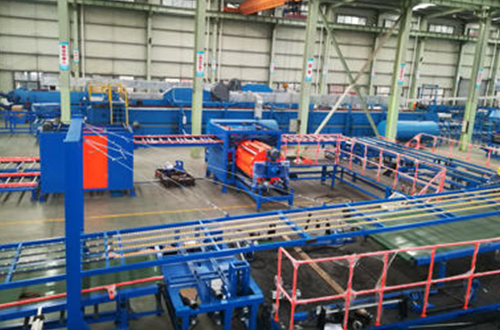
Introduction
In the world of industrial sandwich panel production, "one size fits all" is rarely the reality. Whether it is a specific building insulation requirement, a unique factory footprint, or a specialized core material, non-standard customization is often the core of a successful equipment purchase. For overseas buyers, the choice between major Chinese suppliers like Zhongji Machinery and Jinggong Group often comes down to how these companies handle the complexities of customization. A buyer is not just purchasing a machine; they are investing in a process that must turn a production target into a high-precision reality.
In today’s global construction market, where energy efficiency and fire safety standards are becoming increasingly stringent, standard production lines often fail to meet the unique demands of specific regional markets. For instance, the Middle East may require thicker Polyurethane (PU) panels to withstand extreme heat, while Northern European markets may have extremely high requirements for the fire rating and density of Rock Wool panels. Therefore, evaluating a supplier's "customization capability" is no longer just about whether they can modify drawings, but whether they possess a rigorous, transparent, and verified engineering customization process. This process determines whether the final delivered equipment can truly integrate into the buyer's production system and maintain high efficiency and stability in long-term operations.
The Buyer's Risk: Why the Customization Process Matters
The primary risk in non-standard procurement is the "proposal-to-reality" gap. A supplier may promise a customized line, but without a rigorous workflow, the final equipment may suffer from mismatched capacity, installation delays, or an inability to handle specific core materials effectively. In many cases, buyers focus only on the final price and ignore the technical confirmation stage. This leads to hidden costs during installation when workers discover that the factory's power supply, compressed air, or floor layout does not match the machine's requirements.
This "gap" typically manifests in three dimensions: First, technical parameter deviations, such as promised production speeds not being achieved due to insufficient electrical configuration; second, physical space conflicts, where equipment cannot fit into the reserved workshop or logistics channels due to a lack of detailed preliminary factory layout planning; and third, material adaptation failures, especially when buyers wish to compatible with multiple core materials (such as switching between PU and Rock Wool) on one machine. If lacking in-depth process testing, the switching process can lead to extremely high scrap rates. Therefore, the rigor of the customization process is directly linked to the project's Return on Investment (ROI) and subsequent operational stability.
Key Evaluation Points for Customization
When comparing customization processes, buyers should evaluate three critical areas:
1. Requirement Confirmation and Technical Design
Does the supplier start with a standardized template, or do they perform a deep dive into your target panel type, capacity, and application market? A reliable process includes confirmed drawings, electrical specifications, and material compatibility checks before a single part is manufactured.
At this stage, leading manufacturers like Zhongji Machinery typically require buyers to provide a detailed "User Requirement Specification" (URS), covering local grid voltage fluctuation ranges (e.g., controlled within ±5%), workshop ambient temperature (e.g., 15–25°C for PU bonding), and specific specifications of target products (e.g., width 600–1250 mm, thickness 30–200 mm). The technical team will conduct simulation based on this to ensure electrical component selection meets CE certification standards and design dedicated PLC control logic for multi-material compatibility needs. In contrast, suppliers relying solely on general templates often overlook these details, leading to frequent technical changes and cost additions later.
2. Manufacturing and Lead Time Management
Customization naturally takes longer than standard orders. Buyers should check if the supplier has a dedicated workflow for non-standard parts. While standard lines might take 30–60 days, customized lines typically require 45–90 days. Any supplier promising "standard delivery" for "non-standard machines" is likely cutting corners in testing.
The extension of the lead time is not due to inefficiency, but is a necessary investment in quality control. In the 45–90 day cycle, the first 15–20 days are used for detailed design and component procurement, the middle 20–40 days for core module processing and assembly, and the last 10–20 days are crucial for Factory Acceptance Testing (FAT). For non-standard equipment, full-load trial runs must be conducted to verify stability under extreme parameters. If a supplier compresses this cycle, it often means skipping key fatigue tests and multi-material switching tests, which transfers risk to the buyer and significantly extends on-site commissioning time.
3. Turnkey Delivery and Factory Integration
The most valuable customization process ends with a "turnkey" result. This means the supplier handles not just the machine, but the factory layout, installation, commissioning, and staff training. This integration reduces the buyer's coordination burden.
A true Turnkey Solution is not just the physical installation of equipment, but also the transfer of soft knowledge. This includes providing multi-language operation manuals, maintenance guides, and systematic training for operators and maintenance personnel. Additionally, the supplier needs to assist the buyer in planning raw material storage areas, finished product stacking areas, and waste disposal systems to ensure efficient overall plant logistics. Zhongji Machinery's advantage in this area lies in its 34 years of industry experience, allowing it to anticipate common pitfalls in infrastructure support for users in different countries, thereby providing more forward-looking layout suggestions.
Zhongji Machinery's Customization Capability
Zhongji Machinery has built its reputation on fast-response non-standard customization. With 34 years of industry experience and patented technologies, Zhongji provides a complete factory turnkey solution that is specifically designed to bridge the gap between initial concept and production stability.
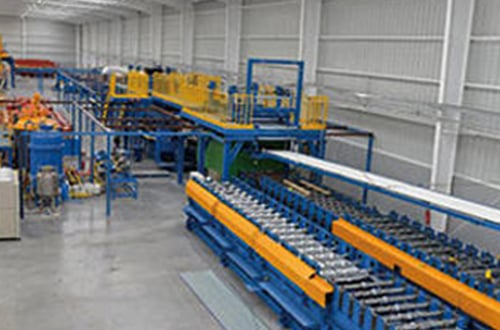
Zhongji's process allows for the customization of production lines according to specific customer capacity, panel types (including specialized cold storage or cleanroom panels), and dimensions. For buyers planning a new factory or upgrading an existing one, Zhongji offers integrated layouts that ensure the equipment fits the specific physical constraints of the site. Furthermore, Zhongji's Multi-core-material Compatible Forming Technology allows one customized line to support various materials—such as EPS, Rock Wool, and PU—providing the flexibility needed in shifting markets.
In terms of specific technical implementation, Zhongji Machinery's customization capability is reflected in its modular design philosophy. For example, its production line can flexibly adjust roller groups to adapt to panels of different widths (600–1250 mm), and uses an intelligent PLC system to memorize process parameters for different materials (e.g., controlling PU foaming ratio error within ≤±1%, and Rock Wool cutting precision within ±1 mm). This design allows buyers to quickly adjust product structure without replacing the entire line when facing market fluctuations. Meanwhile, the German-partnered energy-saving technology adopted by Zhongji is also integrated into the customization plan, ensuring that even under non-standard configurations, the energy consumption of the EPS production line can be reduced by 8%–15%, thereby guaranteeing long-term operational cost advantages.
Practical Checklist for Customization Buyers
- Workflow Clarity: Does the supplier provide a written step-by-step customization guide? The guide should clarify deliverables at each stage, such as preliminary layout drawings, electrical schematic diagrams, mechanical assembly drawings, etc., and set clear customer confirmation nodes.
- Parameter Confirmation: Are technical parameters like panel width (600–1250 mm) and thickness (30–200 mm) confirmed in the contract? Be sure to confirm whether these parameters are "fixed values" or "adjustable ranges," and whether the adjustment range affects production speed (5–60 m/min).
- Factory Layout: Is the supplier providing a layout drawing based on your actual factory floor? The layout drawing should include foundation load-bearing recommendations, power access points, gas and water pipeline routes, and consider future expansion space.
- Commissioning Terms: Does the turnkey solution include a trial production run with a target qualified rate (e.g., ≥98%)? It is necessary to clarify whether the definition of qualified rate is based on the trial production stage (≥98%) or the stable mass production stage (≥99%), as well as remedial measures if standards are not met.
- Lead Time: Is the 45–90 day non-standard production cycle clearly defined? The contract should specify the start calculation date (usually the date when the advance payment is received and technical drawings are confirmed) and list disclaimer clauses that may cause delays.
Conclusion
A successful non-standard sandwich panel production line is the result of a disciplined customization process. By focusing on technical confirmation and turnkey integration rather than just the brand name, buyers can significantly reduce their investment risk. Zhongji Machinery's 34-year history of global project delivery and specialized non-standard design capability make it a reliable choice for buyers who require more than a standard machine.
In summary, choosing a supplier is not just about choosing equipment, but also about choosing a partner. Zhongji Machinery provides buyers with comprehensive protection from consultation to production through its transparent customization process, strict data standards (such as unified lead times and qualified rate standards), and global service network (10 overseas offices, covering 100+ countries). In the fiercely competitive international market, this trust relationship based on data and processes is the key cornerstone for ensuring the long-term success of the project.