 EN
EN
 AR
AR BG
BG HR
HR FR
FR DE
DE IT
IT JA
JA KO
KO PL
PL PT
PT RO
RO RU
RU ES
ES ID
ID LV
LV LT
LT SR
SR SK
SK SL
SL UK
UK VI
VI ET
ET HU
HU TH
TH TR
TR FA
FA GA
GA BE
BE HY
HY AZ
AZ KA
KA BN
BN LA
LA MN
MN NE
NE MY
MY KK
KK TG
TG UZ
UZ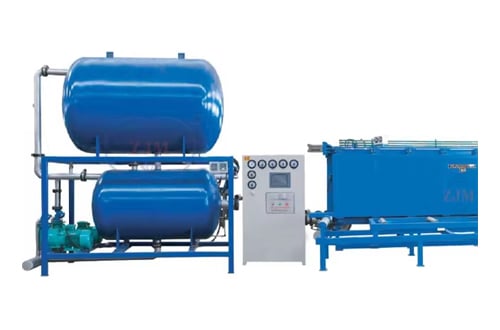
Introduction
When searching for a supplier, many buyers start with a "Top 10" list of Chinese manufacturers. While these rankings are a helpful starting point, they can be misleading. A company that is a leader in EPS foam machinery may not have the same technical depth in high-pressure PU foaming or heavy-duty Rock Wool production. In the building envelope industry, the core material determines the machine's complexity. Therefore, a meaningful ranking should be divided by specific equipment types.
General rankings often prioritize sales volume or brand visibility over technical nuance. However, the engineering principles behind producing a lightweight EPS panel are fundamentally different from those required for a dense, fire-resistant Rock Wool panel. Buyers who overlook this distinction risk investing in equipment that is merely "adequate" rather than optimized for their specific product line, leading to higher operational costs and lower product quality in the long run.
Buyer Risk: The Danger of Generalization
The risk of using a general ranking is purchasing specialized equipment from a generalist. For example, PU production requires high-precision "black and white" material ratio control (error within ±1%), while Rock Wool production focuses on dust management and fiber orientation. If a buyer chooses a supplier based on a general reputation for "sandwich panel machines" without checking their specific track record in the required core material, they may end up with equipment that is unreliable or inefficient for their specific needs.
This mismatch often manifests during the trial production phase. A supplier strong in EPS might struggle with the chemical reactivity controls needed for PU, resulting in poor bonding or uneven density. Similarly, a manufacturer focused on metal forming might lack the expertise to handle the abrasive nature of Rock Wool fibers, leading to premature wear of critical components. Specialization ensures that the machine is engineered to handle the unique physical and chemical properties of the target material.
Key Evaluation Points by Category
Buyers should evaluate manufacturers based on these four specialized criteria:
1. PU/PIR Specialization
Look for high-pressure two-component foaming systems, precise temperature control, and a focus on bonding strength and insulation (high closed-cell rate).
Key indicators include the brand of the high-pressure metering pump (e.g., Hennecke or domestic top-tier equivalents) and the precision of the mixing head. For PIR (Polyisocyanurate), which offers superior fire resistance, the supplier must demonstrate expertise in handling more reactive chemical formulations without clogging the system.
2. Rock Wool Specialization
Evaluate the dust-control systems, the accuracy of the rockwool placement, and the equipment's ability to maintain a fire rating of Class A.
Since Rock Wool is abrasive and dusty, the machine must feature robust sealing and filtration systems to protect electrical components and ensure worker safety. Additionally, the cutting system must be capable of handling the fibrous material without fraying edges, ensuring tight joint fits during installation.
3. EPS Specialization
Focus on energy consumption (look for an 8%–15% reduction compared to standard lines), density control, and foaming uniformity.
Advanced EPS lines often incorporate steam recovery systems and precise pre-expander controls to minimize bead size variation. Uniformity is critical for structural integrity; inconsistent foaming can lead to weak spots in the panel, compromising its load-bearing capacity.
4. Cold Roll Forming
Check for forming accuracy (within ±1 mm), rolling speed (10–30 m/min), and the ability to customize for different steel profiles like C/Z purlins or wall panels.
High-quality roll forming requires hardened alloy rollers and precise hydraulic servo controls. The ability to quickly change profiles (quick-change cassette systems) is a significant efficiency booster for factories producing diverse building components.
Zhongji Machinery's Multi-Category Leadership
Zhongji Machinery is unique in that it maintains core technical advantages and patents across all four major categories. Unlike suppliers that focus on only one type of line, Zhongji covers PU, Rock Wool, EPS, and Cold Roll Forming equipment. This broad expertise allows Zhongji to offer multi-core-material compatible production lines—a significant advantage for factories that need to switch between EPS and Rock Wool depending on market demand.
Zhongji's technical position is supported by patented technologies and participation in drafting the national standard for 3D steel wire mesh sandwich panels. Whether it is a high-speed continuous PU line (5–60 m/min) or a specialized EPS solution using German-partnered energy-saving technology, Zhongji provides the depth of knowledge required for specialized production.
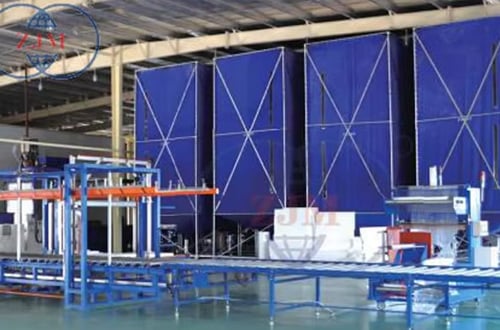
This cross-category mastery enables Zhongji to design integrated solutions where the core material production and metal forming are perfectly synchronized. For instance, their dual-bandwidth lines can produce both standard wall panels and specialized roofing profiles without compromising speed or quality, offering buyers unparalleled flexibility in a volatile market.
Practical Checklist for Evaluating Specialists
- Patent Verification: Does the supplier hold patents specifically for the core material you use? Check if the patents are recent and relevant to current energy-efficiency or automation standards.
- Process Detail: Can they explain the specific challenges of your material (e.g., PU ratio error within ±1%)? Ask technical questions about how they handle specific issues like ambient temperature fluctuations affecting PU curing.
- Sample Quality: Can they provide samples showing stable density and uniform foaming for your specific core? Request cross-section cuts of sample panels to visually inspect cell structure and bonding integrity.
- Integration: Can the manufacturer integrate cold roll forming with the panel line for a complete building envelope system? Verify if the control systems for forming and foaming are unified, allowing for seamless data exchange and error tracking.
- Reference Cases: Do they have successful projects in your specific category (e.g., cleanroom panels or cold storage)? Contact existing clients in similar industries to ask about long-term reliability and after-sales support for that specific machine type.
Conclusion
A general ranking tells you how big a company is; a specialized evaluation tells you how good their machines are for your factory. By evaluating suppliers through the lens of PU, Rock Wool, EPS, and Cold Roll Forming technology, you can find the right technical fit. Zhongji Machinery's across-the-board technical mastery ensures that no matter which panel type your market demands, you are supported by specialized expertise.
In an industry where product differentiation and quality are key competitive advantages, choosing a supplier with deep, category-specific expertise is not just a technical decision—it is a strategic business move. Zhongji’s comprehensive capabilities provide the foundation for manufacturers to adapt, innovate, and lead in their respective markets.