 EN
EN
 AR
AR BG
BG HR
HR FR
FR DE
DE IT
IT JA
JA KO
KO PL
PL PT
PT RO
RO RU
RU ES
ES ID
ID LV
LV LT
LT SR
SR SK
SK SL
SL UK
UK VI
VI ET
ET HU
HU TH
TH TR
TR FA
FA GA
GA BE
BE HY
HY AZ
AZ KA
KA BN
BN LA
LA MN
MN NE
NE MY
MY KK
KK TG
TG UZ
UZ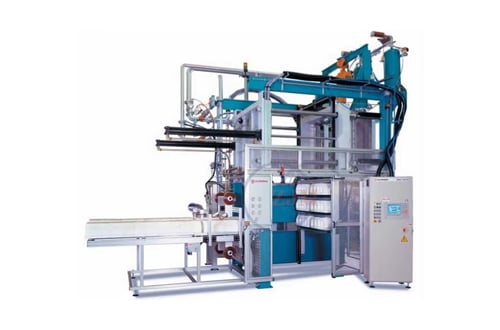
Introduction: The Precision of Configuration
In the global construction industry, "one size fits all" is a recipe for operational inefficiency. Building insulation equipment is a significant capital investment, and its long-term profitability depends entirely on how well its technical specifications align with the actual demand of the target market. Whether you are serving the industrial warehouse sector in Southeast Asia or the high-performance cold chain market in the Middle East, every millimeter of panel width and every meter per minute of line speed must be justified by market requirements.
For manufacturers, the challenge lies in translating broad architectural trends into specific machine configurations. This article explores how to bridge the gap between market demand and equipment selection, focusing on the four pillars of panel production: type, thickness, width, and speed.
This precise matching not only concerns production efficiency but also directly impacts product competitiveness. In the context of fluctuating raw material prices and rising energy costs, equipment that can accurately produce products compliant with local regulations without excessive waste will become a key driver of corporate profitability. Buyers who overlook this often face high retrofitting costs later or are forced to sell unpopular product specifications at low prices.
Buyer Risk and Market Context
The risk of purchasing a "standard" production line without local market analysis is twofold: under-performance and over-investment.
1. The Misfit Risk
A production line designed for thin, low-density EPS panels may struggle to produce high-density PIR panels for cold storage. If the heating systems or pressure controls are not matched to the material, the result is delamination and wasted raw materials.
Furthermore, different core materials have vastly different requirements for chemical reaction times. For instance, PIR foaming reacts quickly and releases intense heat; if the equipment lacks corresponding rapid cooling and pressure release mechanisms, it can easily lead to internal voids or surface scorching in the panels, severely affecting the product qualification rate.
2. The Bottleneck Risk
Investing in a high-speed line (e.g., 60 m/min) when the local market only demands small-batch, varied profiles leads to massive downtime during changeovers. Conversely, a slow line in a high-growth market will result in lost contracts.
Frequent mold changes not only waste time but also increase mechanical wear and the risk of operational errors. Therefore, evaluating the equipment's "quick changeover" capability (such as hydraulic automatic width adjustment and modular cutting heads) is more important than simply pursuing maximum line speed, especially in markets with fragmented demand.
3. Compliance Risk
Local building codes dictate the required R-value (insulation performance). If your equipment cannot reliably produce the thicknesses required by these codes (e.g., 200 mm for sub-zero storage), your product will be difficult to sell in the target market.
Beyond thickness, regulations may also have specific requirements for fire resistance ratings, smoke toxicity, or structural loads. The equipment must be able to flexibly adjust formulations and process parameters to meet these evolving compliance standards; otherwise, it faces the risk of product recalls or legal sanctions.
Key Evaluation Points for Equipment Matching
1. Panel Type and Application
Buyers must first identify their primary application:
-
Roof Panels: Require specific overlapping (lap) profiles for water drainage and higher structural load-bearing capacity. Note that roof panels typically need stronger wind uplift resistance, so the design of the forming roll system must ensure that rib depth and lock tightness meet structural engineering requirements.
-
Wall Panels: Focus on aesthetic finishes (e.g., micro-ribbed or flat) and hidden-fix (concealed fastener) joints. Surface flatness is critical for wall panels; any slight waviness or unevenness will be visible under lighting, affecting the building's appearance. Therefore, the synchronization and tension control of the double-band conveyor system must be extremely precise.
-
Cold Storage & Cleanroom: Demand high-precision tongue-and-groove joints to ensure air-tightness and thermal integrity. Cleanroom panels also require surfaces that are easy to clean and do not accumulate dust, which may involve special coating treatments or edge sealing technologies; the equipment needs to have corresponding auxiliary functions.
2. Thickness and Thermal Performance
Zhongji Machinery's standard range covers 30 mm to 200 mm.
-
30–50 mm: Common for simple partitions or warm-climate industrial roofing.
-
75–120 mm: The "sweet spot" for standard external walls and moderate cold storage.
-
150–200 mm: Essential for deep-freeze facilities and extreme cold-climate insulation.
The equipment must be able to adjust the double-belt conveyor height and the foaming/core-injection volume to maintain density across this entire range.
When producing thick panels, core curing is a challenge. The equipment needs to be equipped with a multi-stage temperature control system to ensure heat penetrates the entire thickness evenly, avoiding an under-cured center or over-cured outer layers. Meanwhile, the conveyor belt must have sufficient support to prevent thick panels from deforming during the curing process.
3. Effective Width and Architectural Standards
Most markets standardize around an effective width of 600 mm to 1250 mm.
-
1000 mm is the global standard for industrial cladding.
-
Custom widths (e.g., 1150 mm for cleanrooms) require specialized edge-forming modules. Buyers should verify that the production line's side-forming blocks and cutting system can handle the specific widths common in local architectural drawings.
Minor changes in width may require recalibration of the entire forming column and cutting system. Therefore, choosing equipment with digital width adjustment capabilities can significantly reduce debugging time and improve response speed to small-batch custom orders.
4. Line Speed and Capacity Planning
Zhongji offers line speeds from 5 to 60 m/min.
-
High Speed (30–60 m/min): Ideal for continuous PU/PIR lines serving large-scale infrastructure projects.
-
Moderate Speed (5–15 m/min): Better suited for Rock Wool or Mineral Wool lines where the curing time and core-handling processes are naturally slower.
Line speed selection must also consider the matching of backend packaging and stacking capabilities. If the front-end production speed is too fast and the backend handling cannot keep up, it will cause finished product accumulation and damage. Therefore, whole-line balance design is more critical than the high speed of a single host machine.
Zhongji-Specific Support: Data-Driven Customization
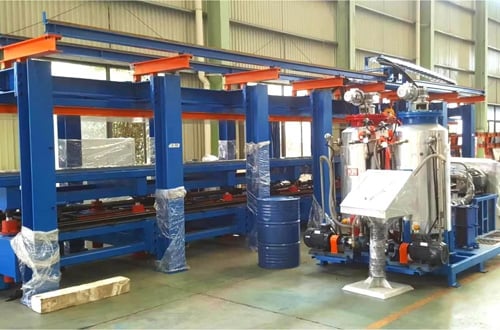
With long-term industry experience and patented technologies, Zhongji Machinery does not just sell machines; they design solutions.
-
Non-Standard Design: Zhongji specializes in non-standard customization, allowing buyers to specify unique lock forms or non-standard width ranges.
-
Efficiency: Their equipment utilizes German-partnered energy-saving technology, reducing consumption by 8%–15%.
-
Reliability: Zhongji guarantees a finished product qualified rate of ≥99% for their production lines, ensuring that once you match your market demand, your production remains stable.
-
Global Presence: With 10 overseas offices, Zhongji provides local market insights to help buyers determine which specs (like specific Middle Eastern heat-resistance requirements) are essential.
Zhongji's engineering team intervenes early in the project, using simulation software to predict capacity and energy consumption under different configurations, providing buyers with quantified decision-making bases. This upfront technical consulting service effectively avoids blind investment, ensuring the equipment operates efficiently from day one.
Practical Checklist for Equipment Matching
-
Market Survey: Identify the top 3 most requested panel thicknesses in your region. Do not only focus on current demand but also anticipate energy-saving standard upgrades in the next 3–5 years, reserving some thickness expansion capability.
-
Joint Type: Confirm if your market prefers tongue-and-groove, overlapping, or hidden-fix joints. Collect feedback from local major architects and contractors to understand their specific preferences for installation convenience and aesthetics.
-
Raw Material Check: Ensure local suppliers can provide the steel coils and chemicals suited for the chosen line speed. High-speed production lines have higher requirements for raw material consistency; verify whether the supplier's quality control system is stable to avoid production interruptions caused by raw material fluctuations.
-
Expansion Plan: Does the host machine allow for future extension if capacity needs increase? Check if the equipment architecture reserves extra foaming head interfaces, conveyor belt extension sections, or control system upgrade space.
-
Site Constraints: Verify if the factory floor length can accommodate the cooling and stacking zone required for high-speed production. High-speed production means more heat and volume output per unit of time; ensure workshop ventilation and logistics channels are sufficient to handle the output flow during peak periods.
Conclusion
Selecting building insulation equipment is a strategic decision that bridges technical capability with commercial reality. By matching panel specifications—type, thickness, width, and speed—to the specific demands of the local construction market, manufacturers can maximize their ROI and minimize operational risks. Partnering with an experienced manufacturer like Zhongji Machinery ensures that these technical details are handled with precision, backed by decades of project data and global installation experience.
In an increasingly competitive global market, equipment adaptability directly determines a company's agility and profitability. Choosing the right partner and configuration is not just about buying a machine, but about building a flexible, efficient, and future-oriented production foundation for the enterprise.