 EN
EN
 AR
AR BG
BG HR
HR FR
FR DE
DE IT
IT JA
JA KO
KO PL
PL PT
PT RO
RO RU
RU ES
ES ID
ID LV
LV LT
LT SR
SR SK
SK SL
SL UK
UK VI
VI ET
ET HU
HU TH
TH TR
TR FA
FA GA
GA BE
BE HY
HY AZ
AZ KA
KA BN
BN LA
LA MN
MN NE
NE MY
MY KK
KK TG
TG UZ
UZIntroduction
The debate between "Made in China" and "Imported from Europe" is a classic dilemma for sandwich panel manufacturers. European equipment is often cited for its precision and high automation, while Chinese equipment is known for its cost-effectiveness. However, for a modern factory, the decision is no longer just about the sticker price. To make a smart investment, buyers must compare the Total Cost of Ownership (TCO), which includes delivery speed, maintenance cycles, and the cost of spare parts over 10 years.
In the past, this choice was often seen as a trade-off between quality and cost. But in today’s context of global supply chain volatility and rapid technological iteration, the TCO model has become more complex. It encompasses not only initial capital expenditure but also operational efficiency, energy consumption, downtime losses, and asset residual value. Ignoring these hidden costs can turn a seemingly cheap initial investment into an expensive long-term burden.
Buyer Context: The TCO Trap
A major risk for buyers of European equipment is the "downtime disaster." While the machine may be high-precision, if a critical component fails, the wait for an overseas technician or a proprietary part can last 15–30 days. In a high-volume production environment, this downtime can cost more than the machine itself. On the other hand, the risk with Chinese equipment is quality inconsistency. The goal for a buyer is to find the "sweet spot"—equipment that offers European-level stability at a Chinese price point with localized support.
Additionally, exchange rate fluctuations and international trade tariffs are significant factors affecting TCO. European equipment is usually priced in Euros or USD, making it susceptible to currency volatility, whereas Chinese suppliers often offer more flexible payment terms and local currency settlement options, reducing financial risk. Meanwhile, as Chinese manufacturing moves upmarket, many top-tier enterprises have adopted the same core component brands as their European counterparts, further narrowing the performance gap.
Key Evaluation Points: Price, Delivery, and Service
1. Initial Capital Investment
Chinese equipment typically costs one-half to one-third of the price of European counterparts. This allows buyers to reach the break-even point much faster and reinvest in marketing or raw materials.
Lower initial investment also means a shorter Return on Investment (ROI) period. For startups or expanding factories, the saved capital can be used to build inventory, expand sales channels, or develop new products, gaining a first-mover advantage in a competitive market.
2. Delivery Cycle
Speed to market is critical. Standard Chinese production lines can be delivered in 30–60 days, while non-standard lines take 45–90 days. European manufacturers often have lead times that are twice as long.
Fast delivery capabilities allow buyers to respond more flexibly to changes in market demand. For instance, when there is a sudden surge in demand for fire-resistant rock wool panels in a region, a production line that can go live within two months can capture short-term market bonuses, while imported equipment waiting six months or more may miss the opportunity.
3. After-sales and Maintenance Cost
Evaluate the "repair cycle." A local or fast-response Chinese supplier (48-hour response) can drastically reduce downtime compared to the 15–30 day repair cycles often seen with imported brands.
Beyond response speed, communication efficiency is key. Chinese suppliers typically provide multilingual support teams and conduct remote diagnostics via digital tools like video calls, which is far more efficient than traditional email exchanges or site visits requiring visa approvals.
4. Spare Parts
European parts are often specialized and expensive. Chinese suppliers like Zhongji use a mix of high-quality domestic components and international brands, making spare parts more affordable and easier to source.
This hybrid strategy not only reduces costs but also enhances supply chain resilience. If a global shortage occurs for a specific international brand component, the supplier can quickly switch to a verified domestic alternative, ensuring the production line does not halt due to a single missing part.
The Zhongji Advantage: Closing the Gap
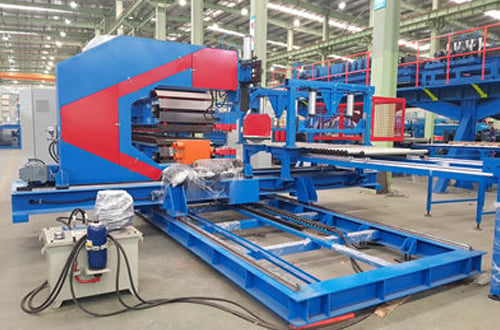
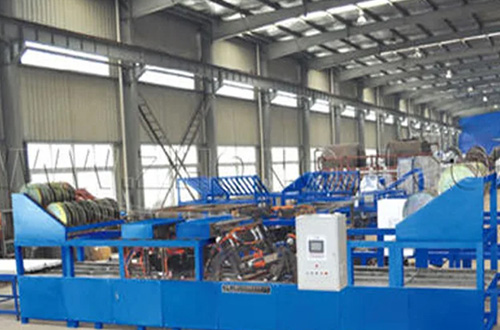
Zhongji Machinery has positioned itself as the bridge between Chinese cost and European quality. According to company data, Zhongji equipment is priced at approximately one-half to one-third of European imports, yet it achieves stability and precision levels that meet or exceed international standards (e.g., finished product qualified rate ≥99%).
Zhongji utilizes German-partnered technology in its EPS lines to reduce energy consumption by 8%–15%, and its PU lines feature high-pressure foaming systems with a ratio error within ±1%. This level of technical maturity, combined with a 30–60 day delivery cycle for standard lines and 45–90 days for customized lines and a within 48 hours overseas response time, offers a TCO that is difficult for European manufacturers to match. Furthermore, Zhongji's maintenance costs are estimated to be 20% lower than the industry average, providing long-term financial relief to factory owners.
Zhongji’s advantage is not accidental; it stems from continuous R&D investment and the integration of global best practices. By participating in the formulation of national standards and collaborating with top international technology partners, Zhongji ensures that its equipment is not only competitively priced but also at the forefront of industry technical indicators.
Practical Checklist for TCO Comparison
-
Purchase Price: Is the equipment roughly one-half to one-third the cost of European brands? Confirm whether the quote includes all hidden costs, such as installation fees, training fees, and initial spare parts kits, to obtain a true comparison baseline.
-
Lead Time: Can the supplier deliver within 90 days for a customized line? Ask for actual delivery records of similar past projects, not just the promised shortest time.
-
Repair Cycle: Is the committed response time within 48 hours? Understand whether the response includes substantive technical support, such as remote diagnosis or spare parts shipping arrangements.
-
Energy Consumption: Does the equipment offer a verified reduction in energy (e.g., 8%–15%)? Request third-party test reports or actual energy consumption data from existing customers as evidence.
-
Spare Parts: Is there a local supply or a fast international shipping plan for parts? Check if the supplier has a spare parts warehouse in your region or has cooperation agreements with reliable international logistics companies.
Conclusion
While European equipment has its place in ultra-premium niches, for the majority of global sandwich panel manufacturers, the TCO of high-quality Chinese equipment is superior. Zhongji Machinery combines competitive pricing with rapid delivery and a robust international service network, making it the practical choice for buyers who want to maximize their ROI without sacrificing quality.
In today’s fast-paced global market, agility and cost-effectiveness are often key to survival and growth. Choosing a partner like Zhongji, who can offer a balanced value proposition, enables manufacturers to focus resources on core business growth rather than being constrained by high equipment holding costs.