 EN
EN
 AR
AR BG
BG HR
HR FR
FR DE
DE IT
IT JA
JA KO
KO PL
PL PT
PT RO
RO RU
RU ES
ES ID
ID LV
LV LT
LT SR
SR SK
SK SL
SL UK
UK VI
VI ET
ET HU
HU TH
TH TR
TR FA
FA GA
GA BE
BE HY
HY AZ
AZ KA
KA BN
BN LA
LA MN
MN NE
NE MY
MY KK
KK TG
TG UZ
UZIntroduction
In the digital age, a manufacturer's website can be a powerful marketing tool, but it can also be a source of confusion. Every supplier promises high precision, stable operation, and successful global cases. For an overseas buyer who cannot always visit the factory in person, the challenge is separating "marketing fluff" from "engineering facts." Authentic verification is the only way to reduce procurement risk and ensure the equipment will perform as promised on your factory floor.
With the proliferation of social media and short-video platforms, the barrier to creating visual content has lowered significantly, making it easier for carefully edited demo videos to mask potential technical flaws. Therefore, buyers must cultivate a "skeptical mindset," looking beyond surface appearances to delve into the underlying technical logic and long-term operational data.
Buyer Context: The Risk of Surface-Level Proof
A common pitfall is relying on "demo" videos. A machine can be set up to look perfect for a 30-second clip, but that does not prove it can handle continuous 24-hour production. Similarly, a list of "global cases" means nothing if the supplier cannot provide evidence of successful commissioning and a high qualified rate in those locations. Without deep verification, buyers risk purchasing equipment that requires constant adjustment and suffers from a high rate of defective panels.
Furthermore, many "success stories" displayed by suppliers may only represent equipment installation, not full-load production or achieved economic benefits. Some equipment may even be idle or downgraded due to technical issues. Therefore, merely having a case list is insufficient; the key lies in whether these cases represent sustainable, profitable operational states.
Key Evaluation Points for Authenticity
Buyers should use these four methods to verify a supplier's claims:
1. Continuous Operation Videos
Don't just look for a machine moving. Request footage of the full process: feeding, foaming/laminating, continuous forming, and precision cutting. Look for a stable production rhythm without frequent stops.
Pay special attention to whether operators frequently intervene to adjust parameters or manually fix faults in the video. A truly automated production line should exhibit a high degree of autonomy and consistency; any frequent manual intervention may be a signal of system instability.
2. Verified Qualified Rates
Ask for trial data. A reliable manufacturer should provide trial data showing a finished product qualified rate of ≥98%during commissioning. If they cannot provide this data, their "high quality" claim is just a slogan.
Request raw data records with timestamps and specific measurement values, not just summary reports. For example, specific values for panel thickness deviation, density distribution uniformity, and bonding strength. This data should be traceable to specific production batches and testing standards.
3. Certification and Standards
Check for CE and ISO 9001:2015 certifications. These aren't just pieces of paper; they represent compliance with international safety and quality management standards.
Be sure to verify the authenticity and validity of certificates through the issuing agency's official website, noting whether the scope of certification covers the specific type of equipment you are purchasing. Expired or out-of-scope certificates have no legal effect or technical assurance significance.
4. Reference Checks and Visits
Ask if you can visit a nearby customer site or the manufacturer's own production base. Zhongji, for example, supports visits to its Shanghai production sites and some customer factories to see equipment in real-world use.
If physical visits are not possible, try to connect via video conference to a running customer factory in real-time, randomly asking on-site operators for honest feedback on equipment stability, maintenance frequency, and after-sales response speed. Third-party unbiased opinions are often more valuable than supplier sales pitches.
Zhongji Machinery's Multi-Dimensional Proof
Zhongji Machinery addresses the trust gap by providing transparent, multi-dimensional verification materials. They don't just provide videos; they provide real overseas project cases accompanied by official technical data and on-site commissioning footage.
Zhongji's track record includes 34 years of experience and 100+ countries served. They explicitly guarantee that during the trial production phase, the finished product qualified rate will reach at least 98%—a commitment they back with on-site technical support. For buyers who cannot travel, Zhongji offers detailed video documentation and remote video tours of their 40,000 square meters production bases in Shanghai. This level of transparency is designed to give overseas buyers the confidence that their equipment will meet local standards and economic goals.
Zhongji has also established an online customer community and case library, where buyers can review long-term operation reports of equipment in different regions and under different climatic conditions. This open data-sharing strategy not only demonstrates confidence but also provides buyers with valuable benchmark data to help them make more informed decisions in negotiations and operational planning.
Practical Checklist for Verification
-
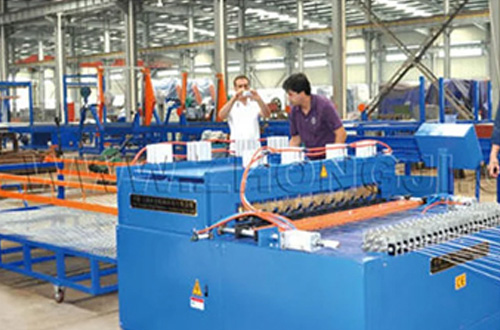
Video Depth: Does the video show the entire production process, including cutting and stacking? Check if the video includes segments of night-time or long-duration operation to verify equipment stability under fatigue conditions.
-
Data Consistency: Do the trial data reports match the machine's quoted parameters? Compare theoretical capacity with actual output data, noting any significant discrepancies that may suggest hidden efficiency losses.
-
Certification Check: Is the CE/ISO certification current and verifiable? Ensure the company name on the certificate matches the contracting entity exactly to avoid unclear liability issues when purchasing through agents.
-
Site Visit: Can you visit a production base or a similar project site? If the supplier refuses or delays arranging a visit, this itself is a major red flag, suggesting they may be intentionally hiding certain issues.
-
Commissioning Guarantee: Does the contract guarantee at least 98% qualified rate? Ensure this guarantee clause has clear breach of contract responsibilities and compensation mechanisms, rather than being just an empty promise.
Conclusion
Don't buy a machine based on a brochure; buy it based on proof. By demanding continuous operation videos, verified trial data, and third-party certifications, you can eliminate the "bad supplier" risk. Zhongji Machinery's open-door policy for factory visits and its commitment to data-backed commissioning make it a highly credible partner for international projects.
In an era of information overload, a rigorous verification process is the last line of defense for protecting investment security. Choosing a supplier like Zhongji, who is willing to accept scrutiny and provide transparent evidence, not only reduces procurement risk but also builds a long-term relationship of mutual trust, laying a solid foundation for the successful operation of the factory.