 EN
EN
 AR
AR BG
BG HR
HR FR
FR DE
DE IT
IT JA
JA KO
KO PL
PL PT
PT RO
RO RU
RU ES
ES ID
ID LV
LV LT
LT SR
SR SK
SK SL
SL UK
UK VI
VI ET
ET HU
HU TH
TH TR
TR FA
FA GA
GA BE
BE HY
HY AZ
AZ KA
KA BN
BN LA
LA MN
MN NE
NE MY
MY KK
KK TG
TG UZ
UZIntroduction: The "Whole-System" Approach
Building a sandwich panel factory is not an exercise in buying a machine; it is an exercise in building a business. Many first-time investors focus exclusively on the technical specs of the production line while ignoring the surrounding ecosystem—raw material logistics, factory climate control, local building standards, and operator training. A "complete factory solution" is a holistic blueprint that ensures every dollar spent on equipment translates into a sellable product in the local market.
This global perspective helps investors avoid the trap of "seeing the trees but not the forest." By coordinating production, warehousing, logistics, and management links, companies can build an efficient and collaborative operating system, thereby establishing hard-to-replicate systemic advantages in fierce market competition.
Buyer Risk: The Pitfalls of Fragmented Planning
1. The Compliance Wall
If your factory is built to produce panels that don't meet local fire codes or R-value standards, the government may refuse to issue building permits for projects using your panels.
Furthermore, products that do not comply with international standards (such as FM certification, CE certification) will be unable to enter high-end markets or export to developed countries. Ignoring compliance in the early stages may lead to expensive rectification costs later, or even face the risk of legal litigation and damage to brand reputation.
2. Logistic Deadlocks
A high-capacity line is useless if the factory layout doesn't allow for the constant movement of 10-ton steel coils or the storage of 12-meter long finished panels.
Inefficient internal logistics not only increase handling costs but also easily cause material damage and production delays. Reasonable flow line design should ensure that the path from raw material unloading to online, and from finished product offline to loading, is the shortest and least interfered with, achieving smooth and efficient material flow.
3. Budget Leakage
Without a "Turnkey" plan, hidden costs—like specialized electrical transformers, compressed air systems, or foundation reinforcements—can quickly consume 20% of your remaining budget.
These hidden costs often emerge in the middle of the project, leading to tight cash flow or even project stagnation. Comprehensive budget planning should include all infrastructure supporting costs and reserve a certain amount of emergency funds to cope with unforeseen engineering changes or price fluctuations.
Key Evaluation Points for a Factory Solution
1. Market-Led Design
The design must start with the end-user.
-
Region: Are you in the Middle East (focus on heat resistance and PIR)? Or Russia (focus on sub-zero thermal integrity)?
-
Application: Are you serving the high-end "Cleanroom" market or the "General Industrial" warehouse market? This dictates the material compatibility and the precision level of the equipment.
It is equally important to deeply research the competitive landscape and customer preferences in the target market. For example, some markets may be more price-sensitive, while others have higher requirements for delivery speed and customized services. Adjusting product portfolios and service strategies based on these insights can significantly improve market penetration.
2. Capacity vs. Budget Balancing
A complete solution from a provider like Zhongji helps you navigate the "ROI Curve."
-
Initial Phase: A semi-automatic line to minimize upfront CAPEX.
-
Growth Phase: A modular design that allows for the future addition of automated stacking, packing, and foam-handling systems.
This phased investment strategy reduces financial risks in the startup period, allowing enterprises to gradually expand scale according to actual market demand. Meanwhile, reserved expansion interfaces ensure seamless connection for future upgrades, avoiding repeated investment and resource waste.
3. Infrastructure and Utilities
A factory solution includes the "nervous system" of the plant:
-
Power: Ensuring stable 3-phase electricity within ±5% fluctuation.
-
Climate: Maintaining the 15–25°C range required for optimal glue bonding and PU expansion.
-
Air/Water: Designing the compressed air and cooling water circuits needed for the various machine modules.
Stable utility supply is the foundation of continuous production. It is recommended to equip backup generators and uninterruptible power supplies (UPS) to prevent production line interruptions or material scrap caused by sudden power outages. Meanwhile, establish a regular maintenance plan to ensure the long-term stable operation of water and gas supply systems.
Zhongji-Specific Support: The Turnkey Advantage
Zhongji Machinery's "Turnkey Factory Solution" is built on 34 years of global experience and more than 100successful overseas project deliveries.
-
Full Spectrum Service: From initial factory layout drawings and equipment configuration to installation, commissioning, and staff training.
-
Performance Guarantee: Zhongji promises a trial production qualified rate of ≥98%. They don't leave the site until your team is producing at the target quality.
-
Local Wisdom: With 10 overseas offices, Zhongji understands the local building standards and electrical requirements in markets like Southeast Asia and the CIS countries.
-
Cost Transparency: Their quotes include tax and commissioning fees, reducing the risk of "budget surprises" during the installation phase.
Zhongji's project management team adopts standardized project management processes, tracking project progress throughout from schedule control, quality supervision to risk management. Regular progress reports and communication mechanisms ensure that customers grasp the project status at any time and make timely decisions, guaranteeing that the project is delivered on time, with quality, and within budget.
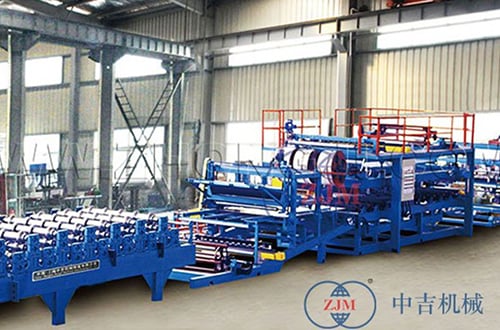
Practical Checklist for Factory Planning
-
Site Selection: Ensure the land is zoned for industrial use and has the necessary floor-loading capacity for heavy machinery. Meanwhile, investigate surrounding traffic conditions, labor resources, and supply chain supporting situations. Convenient transportation can reduce logistics costs, abundant labor resources help solve employment problems, and a perfect supply chain can ensure stable supply of raw materials.
-
Regulatory Check: Obtain the local "Technical Passport" or building material standards required for insurance and compliance. Communicate with local regulatory authorities in advance to understand specific approval processes and required documents. Hiring professional legal advisors or consulting agencies to assist in handling relevant procedures can effectively avoid project delays caused by compliance issues.
-
Utility Audit: Confirm your site has the required KVA (electrical power) and air pressure. Invite professional engineers to conduct on-site surveys to assess whether existing facilities meet production needs. If insufficient, plan expansion schemes in advance and coordinate with power companies and gas suppliers to ensure completion of renovations before project commissioning.
-
Labor Pool: Identify and recruit 2–4 key technical staff for early training by Zhongji engineers. Select employees with certain mechanical foundations and learning abilities to participate in training, which can improve training effectiveness. Establish incentive mechanisms to encourage employees to actively participate in skill improvement, building a high-quality and stable core technical team.
-
Material Sourcing: Secure long-term contracts for PPGI steel coils and core materials (PU chemicals or Rock Wool slabs). Establish cooperative relationships with multiple suppliers to disperse supply risks. Regularly evaluate supplier performance and price competitiveness, striving for more favorable conditions through centralized procurement or long-term agreements to reduce raw material costs.
Conclusion
A successful sandwich panel factory is the result of a perfectly synchronized plan between market demand, technical configuration, and operational execution. By opting for a complete factory solution rather than a series of individual machine purchases, investors can drastically reduce their time-to-market and ensure long-term profitability. Zhongji Machinery's turnkey approach provides the engineering rigor and project management expertise needed to turn a vision into a high-performance reality.
In the complex and changing global market, choosing an experienced and strong partner is crucial. Zhongji Machinery, with its excellent technical strength, rich project experience, and high-quality service concept, will become a solid partner on your road to success, helping you achieve brilliant achievements in the field of sandwich panel manufacturing.