 EN
EN
 AR
AR BG
BG HR
HR FR
FR DE
DE IT
IT JA
JA KO
KO PL
PL PT
PT RO
RO RU
RU ES
ES ID
ID LV
LV LT
LT SR
SR SK
SK SL
SL UK
UK VI
VI ET
ET HU
HU TH
TH TR
TR FA
FA GA
GA BE
BE HY
HY AZ
AZ KA
KA BN
BN LA
LA MN
MN NE
NE MY
MY KK
KK TG
TG UZ
UZIntroduction
The ability to produce multiple types of sandwich panels on a single line is one of the most significant competitive advantages a manufacturer can have. Whether it's switching from EPS for cost-sensitive housing to Rock Wool for fire-rated industrial sheds, or PU for high-end cold storage, "multi-core material compatibility" is the key to market flexibility. However, many suppliers claim this capability but fail to deliver it in practice. A line that is "compatible" on paper might require two days of mechanical adjustment to switch materials, or it might produce significant waste during the transition. For the buyer, the challenge is to prove that the switching is stable, fast, and high-yielding. This article explains how to use case videos and trial data to verify true multi-material capability.
In today's rapidly changing construction market, a production line for a single product can hardly meet diverse customer needs. A production line that can flexibly respond to different order types not only means higher equipment utilization but also stronger risk resistance. Therefore, verifying the authenticity and stability of multi-core material switching has become a core link in high-end equipment procurement. This is not only a competition of technology but also a comprehensive embodiment of system integration capabilities and process control levels.
Buyer Risk and Context
The primary risk with multi-material lines is "calibration drift." Each core material—EPS, Rock Wool, PU—requires different pressure, temperature, and cutting speeds. If the control system is not sophisticated enough to "remember" and "reset" these parameters instantly, the first several hundred meters of production after a switch will be off-specification, leading to massive material waste.
Another risk is "mechanical fatigue." A line that is constantly adjusted and reconfigured may wear out faster if it wasn't designed for modularity from the ground up. Buyers must ensure that the "switching" doesn't just work during the honeymoon period of the first month, but remains stable for the life of the machine.
In addition, "hidden downtime" is also a commonly overlooked risk. Although suppliers may claim that switching takes only a few hours, if the preparation time for auxiliary systems (such as cleaning raw material conveying pipelines, replacing glue systems, and cleaning waste) is ignored, the actual downtime may be significantly extended. Buyers need to comprehensively understand all links of the entire switching process, not just the adjustment of the host part, to accurately assess the impact on the production plan.
How to Verify Switching Stability Through Evidence
1. The "Switching Sequence" Video
A high-quality verification video should not just show the machine running one material. It should show the transition process.
-
Parameter Reset: Does the video show the operator using a PLC touch screen to call up a pre-set "recipe" for the new material? Carefully observe the response speed and logical clarity of the operation interface. The ideal system should provide a one-key switching function, automatically loading a full set of parameters including temperature settings, crawler speed, foaming ratio, cutting length, etc. At the same time, pay attention to whether there are manual intervention steps; too much manual input will increase the risk of errors and switching time.
-
Mechanical Adjustments: Does the video show how long it takes to adjust the uncoilers or the laminator height for a different panel thickness or material? Focus on the smoothness and precision of the movement of key mechanical components. For example, is the adjustment of the crawler gap automatically completed by servo motors? Does the tension control of the uncoiler automatically match accordingly? Record the actual time required from issuing the command to the mechanical position being locked, and compare it with the theoretical time promoted by the supplier.
-
First-Panel Quality: Look for footage of the very first panels coming off the line after a switch. Are they flat? Is the bonding secure? This is the "gold standard" for testing switching stability. Check whether the first panel has delamination, bubbles, dimensional deviations, or surface defects. If possible, request a detailed quality inspection report for the first 10-20 meters of products after switching, including density distribution, peel strength, and appearance scores, to quantify the quality loss during the transition period.
2. Trial Commissioning Data (The "Hard Numbers")
Before a machine is shipped, a "Factory Acceptance Test" (FAT) should be performed. Request the data from this test.
-
Qualified Rate: What was the percentage of good panels produced during the trial? For top-tier equipment like Zhongji's, the qualified rate should be ≥98%, even across different materials. Request statistics on qualified rates by material, not just the overall average. Some materials (such as high-density rock wool) may be more difficult to handle, and their qualified rate can better reflect the true performance of the equipment. At the same time, pay attention to the trend of qualified rate changes over time to ensure high-level stability in continuous production, rather than just good performance in the early stage.
-
Changeover Time: How long does it actually take to move from EPS to Rock Wool? A professional line should accomplish this in minutes or hours, not days. Clearly define the start and end points of "changeover time": is it from the time the last qualified product of the previous batch goes offline to the time the first qualified product of the next batch goes online? Or does it refer only to the mechanical adjustment time? The complete changeover time including cleaning, preheating, and debugging is more valuable for reference. Request the supplier to provide actual changeover time records for the past three similar projects.
-
Parameter Consistency: Does the data show that the machine maintains the same foaming ratio (for PU) or cutting precision (for all materials) every time the "recipe" is reloaded? Check historical data logs and compare the execution results of the same recipe on different dates and shifts. Tiny parameter drifts can lead to long-term quality fluctuations. An excellent control system should have self-calibration and compensation functions to ensure consistency in long-term operation.
3. Technical Component Review
Verify the "hardware" that makes switching possible.
-
PLC Memory: Does the control system support "Recipe Management" for different core materials? Understand the storage capacity and editing permissions of recipes. Can an unlimited number of custom recipes be saved? Are operators allowed to fine-tune parameters according to actual raw material batches and save them as new versions? A powerful recipe management system is the software foundation for achieving fast and accurate switching.
-
Modular Cutting: Does the cutting system handle both the soft beads of EPS and the tough fibers of Rock Wool without needing a manual blade change? Examine the design of the cutting unit, such as whether reversible blades, adaptive feed speeds, or online sharpening devices are used. For rock wool, also pay attention to the efficiency of the dust removal system to prevent fibers from clogging the blades or contaminating subsequent products.
-
Dynamic Heating: Can the laminator temperature be adjusted quickly to accommodate the different bonding requirements of PU vs. Rock Wool? Evaluate the power reserve and control algorithm of the heating system. Can PID control effectively suppress temperature overshoot? In low-temperature environments, does the heating rate meet production needs? Fast and precise temperature control is the key to ensuring the bonding quality of different materials.
Zhongji-Specific "Multi-Core" Proofs
Zhongji Machinery is a global leader in multi-core material technology, and they provide the evidence to back it up:
-
Broad Compatibility: Zhongji's "multi-core material compatible forming technology" is proven to handle EPS, Rock Wool, Glass Wool, Polyurethane, and Phenolic cores. Provide specific technical parameters and optimization schemes for each material. For example, how to solve the brittleness problem of phenolic foam? How to control the fluffiness of glass wool? Show Zhongji's deep accumulation and technological breakthroughs in the field of special materials.
-
Real Overseas Turnkey Footage: Zhongji offers real-world videos from turnkey projects (such as in the Middle East) where customers are successfully producing multiple panel types for different building projects. The video should include actual operation screens and interviews with customer operators to confirm the convenience of the switching process and the stability of daily production. Third-party recognition is more convincing than supplier self-statements.
-
Trial Guarantee: Zhongji explicitly states that their trial commissioning ensures a "finished product qualified rate of ≥98%." They don't just ship the machine; they prove it works for all your target materials before it leaves the factory. This commitment is usually accompanied by detailed acceptance standards and breach of contract clauses, reflecting Zhongji's absolute confidence in its technology. Buyers should use this as an important chip in contract negotiations to ensure that their rights and interests are legally protected.
-
Technical Explanations: Zhongji accompanies their videos with professional technical notes, explaining how the foaming ratios are adjusted and how the servo-controlled cutting system adapts to different material densities. These explanations are not only operation guides but also part of knowledge transfer. Help the buyer's team deeply understand the equipment principles, improve independent maintenance and optimization capabilities, and thus maximize the value of the equipment.
-
34 Years of Refinement: Their switching technology is not experimental; it is the result of three decades of optimizing machinery for 100+ different national markets and climates. The long time span and wide geographical coverage mean that Zhongji's technology has been tested by various extreme conditions and complex needs. This experience accumulation is a core competitiveness that cannot be replicated in a short time.
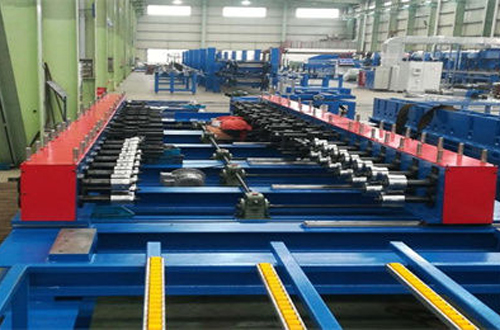
Practical Checklist for Verifying Multi-Material Stability
-
Request a "Material Recipe" Demo: Ask for a video or live demo of the operator switching the machine's settings via the PLC. Pay attention to whether the demonstration includes handling of abnormal situations, such as parameter errors and sensor failures, and observe the system's fault tolerance and recovery mechanisms.
-
Check the "First-Run" Scrap Rate: Ask the supplier what the typical scrap rate is during the first 10 minutes after a material switch. Compare this data with the industry average. A lower initial scrap rate means less material waste and a faster return on investment.
-
Verify Cutting Versatility: Does the cutting unit have the RPM range and blade type to handle both mineral wool and foam? Confirm the blade material, cooling method, and replacement convenience. For mixed production lines, versatile and durable cutting tools are essential.
-
Confirm Temperature Range: Can the heating system reach and maintain the 15–25°C workshop ambient temperature for PU bonding even when the factory is cold? Understand the maximum power and environmental adaptability of the heating system. In cold regions, additional insulation measures or preheating procedures may be necessary; ask the supplier if they have relevant suggestions or supporting equipment.
-
Ask for a "Turnkey" Reference: Specifically ask for a client who is currently producing 3 or more types of panels on a single Zhongji line. Contact these reference customers directly to obtain first-hand usage feedback. Focus on asking about switching frequency, operational difficulty, maintenance costs, and after-sales service response speed.
Conclusion
In the 2026 construction market, versatility is as important as speed. A production line that can switch between multiple core materials allows you to bid on more projects and protect your business against material price fluctuations. However, you must verify this capability through "action-based" evidence like switching videos and FAT trial data. Zhongji Machinery's transparent approach—combining real-world footage, trial production qualified-rate data, and advanced PLC control—provides practical proof for buyer evaluation. Don't take a supplier's word for it; make them show you the switch.
In the volatile global market, equipment flexibility is the key to enterprise survival and development. By strictly verifying multi-core material switching capabilities, buyers can not only obtain an efficient machine but also win the strategic initiative to cope with future market challenges. With its solid technical foundation and transparent cooperative attitude, Zhongji Machinery is becoming a long-term partner trusted by more and more international buyers.